
Home / How Do You Know If You Need a Wisdom Tooth Removed?
How Do You Know If You Need a Wisdom Tooth Removed?
Table of Contents
September 11, 2026
|Dr. Aniket Bose
|5 Min Read
Wisdom teeth, also known as third molars, are the last teeth to appear at the back of the mouth. There may not always be enough jaw space for them to develop comfortably.
While some people have no trouble with their wisdom teeth, others may experience recurring discomfort, swelling, difficulty cleaning the area, or changes around nearby teeth.
Having some discomfort does not automatically mean a wisdom tooth must be removed. The decision depends on the tooth’s position, condition, and whether it is creating or likely to create problems.
At Smile For All Dental Clinic in Kolkata, we believe every case should be assessed individually. Knowing the common warning signs can help you understand when it may be time to seek professional advice.
Why Do Wisdom Teeth Sometimes Cause Problems?
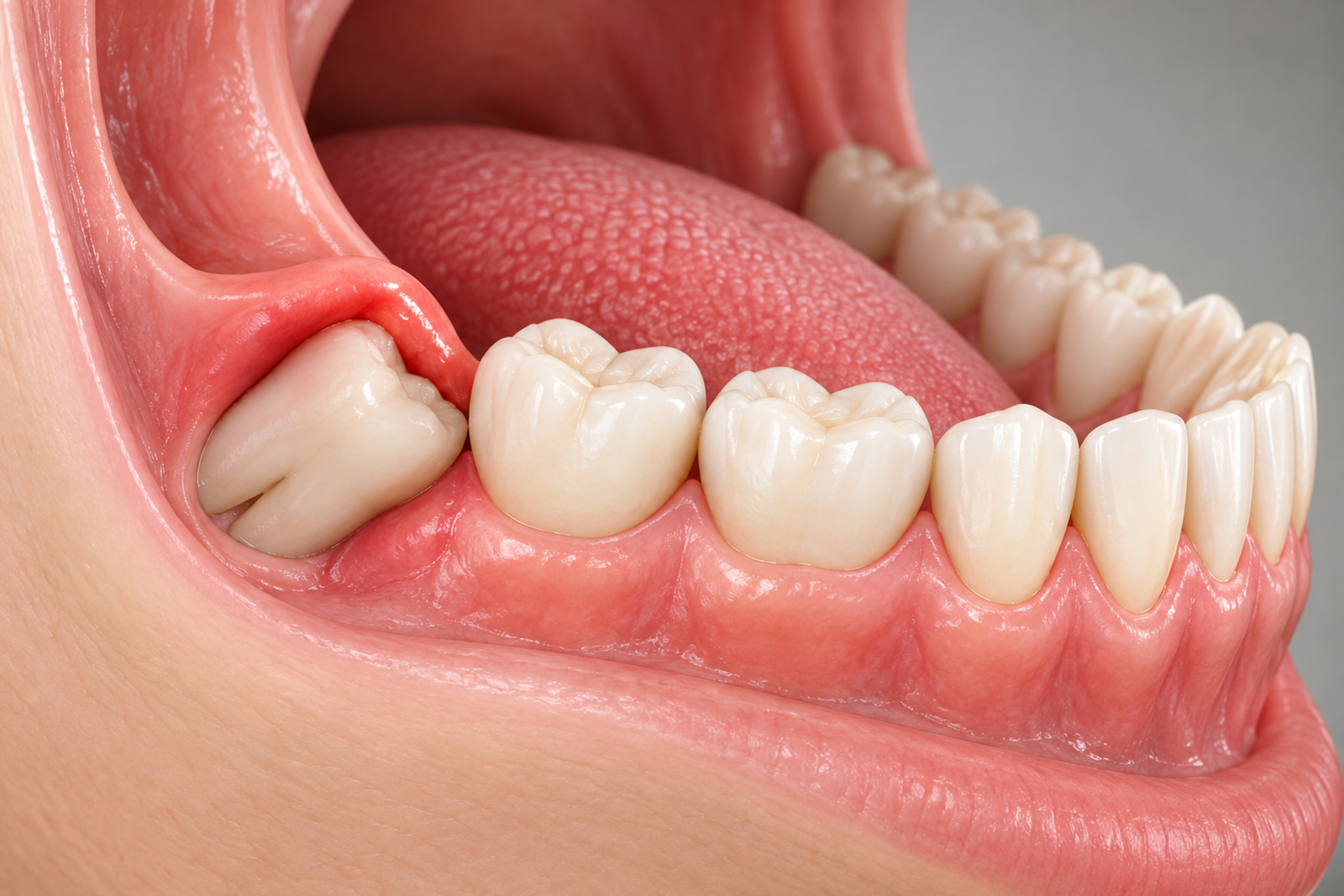
Wisdom teeth grow at the very back of the mouth, where there may not always be enough room for them to develop comfortably.
Some emerge normally and can be maintained like other teeth. Others may appear at an unusual angle or remain partly covered by surrounding tissue, making the area harder to clean.
The position of the tooth is important, but dentists also consider recurring symptoms, surrounding tissue, and the condition of nearby teeth before recommending treatment.
Signs You May Need Your Wisdom Tooth Removed
Certain signs may indicate that your wisdom tooth needs professional attention.
Repeated Discomfort
Recurring pain at the back of your mouth may indicate an underlying problem, especially when it keeps returning.
Difficulty Cleaning
Difficulty cleaning the area can lead to food and debris building up, particularly when there is limited available space.
Swelling
A swollen gum around the tooth that keeps returning should be checked by a dentist.
Trouble Eating
Difficulty chewing or discomfort while eating may indicate that the wisdom tooth is causing a problem.
Changes Around a Nearby Tooth
A wisdom tooth may affect a nearby tooth, especially when food frequently gets trapped between them.
Recurring Problems
Repeated wisdom tooth problems should not be ignored, even if the symptoms temporarily disappear.
When Is Wisdom Tooth Pain a Sign of a Problem?
Not every ache means a wisdom tooth needs to be removed. Mild, temporary discomfort can sometimes occur while a wisdom tooth is developing.
However, consider a dental examination if you experience:
- Repeated discomfort
- Swelling in the same area
- Difficulty keeping the area clean
- Food frequently getting trapped
- Difficulty chewing
- A persistent unpleasant taste or discharge
- Increasing jaw stiffness or difficulty opening your mouth
Significant swelling, fever, difficulty swallowing, or breathing difficulties require prompt medical attention.

When Cana Wisdom Tooth Stay?
Not every wisdom tooth needs to be removed.
If it is positioned appropriately, remains healthy, can be cleaned properly, and is not affecting nearby teeth or tissues, your dentist may recommend keeping it and monitoring wisdom teeth during routine visits.
This is why professional assessment is important. Having wisdom teeth does not automatically mean that they need to be removed.
How Does a Dentist Decide What Is Best?
A dentist considers several factors before making a recommendation, including:
- The tooth position
- Available space
- Whether the area can be cleaned properly
- The condition of surrounding tissues
- The health of neighbouring teeth
- Any existing or developing problems
- Findings from appropriate dental imaging
A dental X-ray can provide information about the tooth’s position that cannot always be seen during a routine examination.
This helps your dentist make a decision based on your individual circumstances.
What Happens If You Keep Ignoring the Problem?
Symptoms can sometimes disappear without the underlying issue being resolved.
For example, discomfort may settle temporarily and then return later. Similarly, an area that is difficult to clean may continue to cause problems even when there is no current discomfort.
Ignoring recurring symptoms can allow a small concern to become more complicated. Getting an assessment early gives you a clearer understanding of what is happening and what options may be available.
What Should You Do If You Are Not Sure?
If you are unsure whether your wisdom tooth needs attention, do not try to make the decision based on symptoms alone.
Instead:
- Notice how frequently the symptoms occur.
- Look out for swelling or changes around the area.
- Pay attention to difficulty eating or cleaning.
- Arrange an examination if problems keep returning.
- Discuss the findings and treatment options with your dentist.
A problematic wisdom tooth may need treatment, while a healthy tooth may simply be monitored.
Why a Dental Check-Up Matters
It can be difficult to determine the condition of a wisdom tooth based only on how it feels.
You may have pain that does not require removal, while another tooth may have a developing problem without causing noticeable symptoms.
A professional dental examination, supported by imaging when necessary, allows your dentist to assess the tooth properly.
This helps you understand whether treatment is needed or whether monitoring wisdom teeth is a suitable approach.
Frequently Asked Questions (FAQs)
Where are wisdom teeth located?
Wisdom teeth are located at the very back of the mouth and are the last set of molars to appear.
Which teeth do not appear until you are an adult?
Wisdom teeth usually appear during the late teens or early adulthood.
Are wisdom teeth useful for chewing food?
Yes, they can help with chewing, but they are not essential for normal chewing.
What is wisdom teeth surgery called?
It is commonly called wisdom tooth removal or wisdom tooth extraction.
Why do people get wisdom teeth removed?
Wisdom teeth may be removed when they cause recurring pain, swelling, difficulty cleaning, or problems with nearby teeth.
Takeaways
Knowing whether you need a wisdom tooth removed is not simply about whether it hurts. The tooth’s position, recurring symptoms, cleanliness, and effect on nearby structures all matter.
If you experience repeated discomfort, swelling, difficulty cleaning the area, or changes around the back of your mouth, consider arranging a professional assessment.
Get Expert Advice for Your Wisdom Tooth Removal
If you are experiencing recurring pain, swelling, or other wisdom tooth symptoms, schedule a dental examination at Smile For All Dental Clinic in Kolkata. Our dental team can evaluate your wisdom tooth and help you understand whether treatment or monitoring is right for you.
Call us today at Smile For All Dental Clinic in Kolkata for further information or to schedule a one-on-one consultation.
Continue Reading