
Home / How Dental Implants Can Help Restore Your Natural Smile
How Dental Implants Can Help Restore Your Natural Smile
Table of Contents
August 17, 2026
|Dr. Aniket Bose
|6 Min Read
A missing tooth is not just about appearance. It can affect the way you chew, speak, and smile. It may also make you feel less confident in photos or social situations.
If you have a gap, loose dentures, or a tooth that needs to be removed, dental implants can be a reliable long-term option. They replace the missing tooth root and support a replacement tooth, helping restore the function and appearance of your smile.
But how do dental implants work? Who can benefit from them? And what can you expect during treatment?
At Smile For All Dental Clinic, we help patients understand their tooth replacement options and choose treatment based on their individual needs. With proper planning and care, dental implants can help restore a natural-looking and functional smile.
What Exactly Is a Dental Implant?
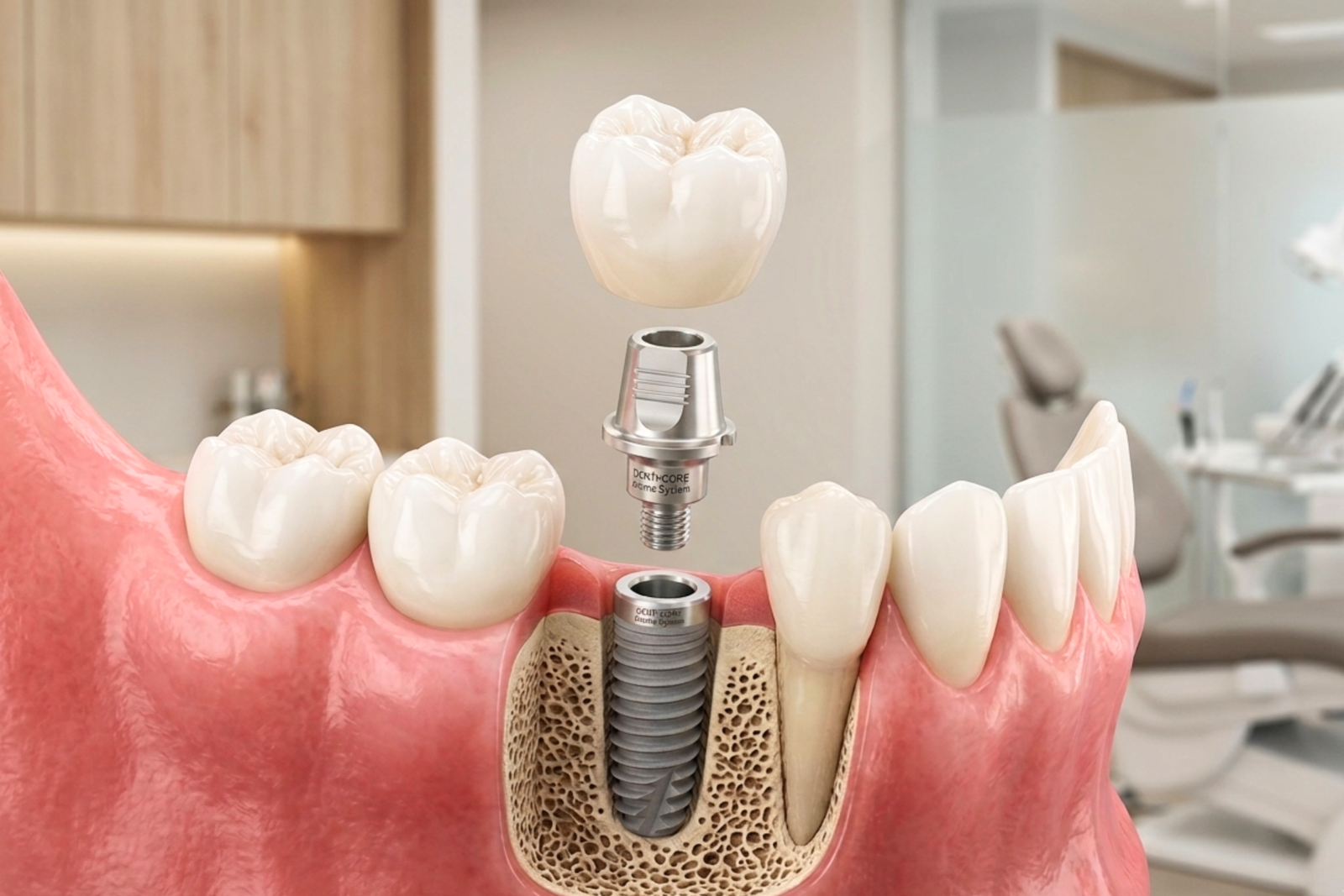
A dental implant is a small post, usually made of titanium, that is placed into the jawbone to replace the root of a missing tooth. Zirconia implants are another option and may be suitable for some patients.
After the implant is placed, it slowly joins with the surrounding bone. This process is called osseointegration. Once the area has healed, a connector called an abutment is placed, followed by a custom-made crown.
The crown is designed to match your natural teeth in shape, size, and colour. It helps restore the look and function of the missing tooth.
Unlike removable dentures, a dental implant is fixed in the jawbone. It provides a stable base for the replacement tooth and can be a long-term option for replacing missing teeth.
What Makes Dental Implants a Good Choice?
- 1. Natural-Looking Appearance
Dental implants are designed to match the surrounding teeth. The crown can be made to match the colour, shape, and size of your natural teeth. With proper planning, the final result can look very natural. - 2. Support for the Jawbone
When a tooth is lost, the bone around the missing tooth can gradually decrease over time. A dental implant replaces the tooth root and provides stimulation to the surrounding bone. This can help maintain the bone around the implant. - 3. Better Chewing Comfort
A missing tooth can make chewing less comfortable. Dentures can also move while eating. An implant-supported tooth is fixed in place and can provide stable support when chewing.
- 4. No Need to Rely on Neighbouring Teeth
A traditional dental bridge may require support from the teeth next to the gap. A dental implant is placed directly into the jawbone and can support its own crown. This may help preserve the natural structure of the neighboring teeth. - 5. Long-Term Tooth Replacement
Dental implants are designed to provide a long-term solution for missing teeth. Longevity depends on oral hygiene, gum health, bone support, lifestyle, and regular dental care.
With proper care and regular dental check-ups, dental implants can provide reliable long-term results for many patients.
Can Anyone Get Dental Implants?
Not everyone with a missing tooth needs a dental implant. Dental implants may be suitable for adults who have good oral health and enough jawbone to support the implant.
Your dentist will usually check the following
- Missing teeth: Dental implants can replace one or more missing teeth.
- Gum health: Healthy gums are important for successful implant treatment. Existing gum disease may need treatment first.
- Jawbone: Enough healthy bone is needed to support the implant. A bone graft may be recommended if there has been significant bone loss.
- Smoking: Smoking can slow healing and may increase the risk of implant complications.
- Medical conditions: Conditions such as poorly controlled diabetes may affect healing and treatment outcomes.
- Your dentist may recommend Dental X-rays or a 3D scan to assess your jawbone, gums, and surrounding teeth. This helps determine whether dental implants are right for you or whether additional treatment, such as a bone graft or sinus lift, is needed first.
How Does the Dental Implant Procedure Work?
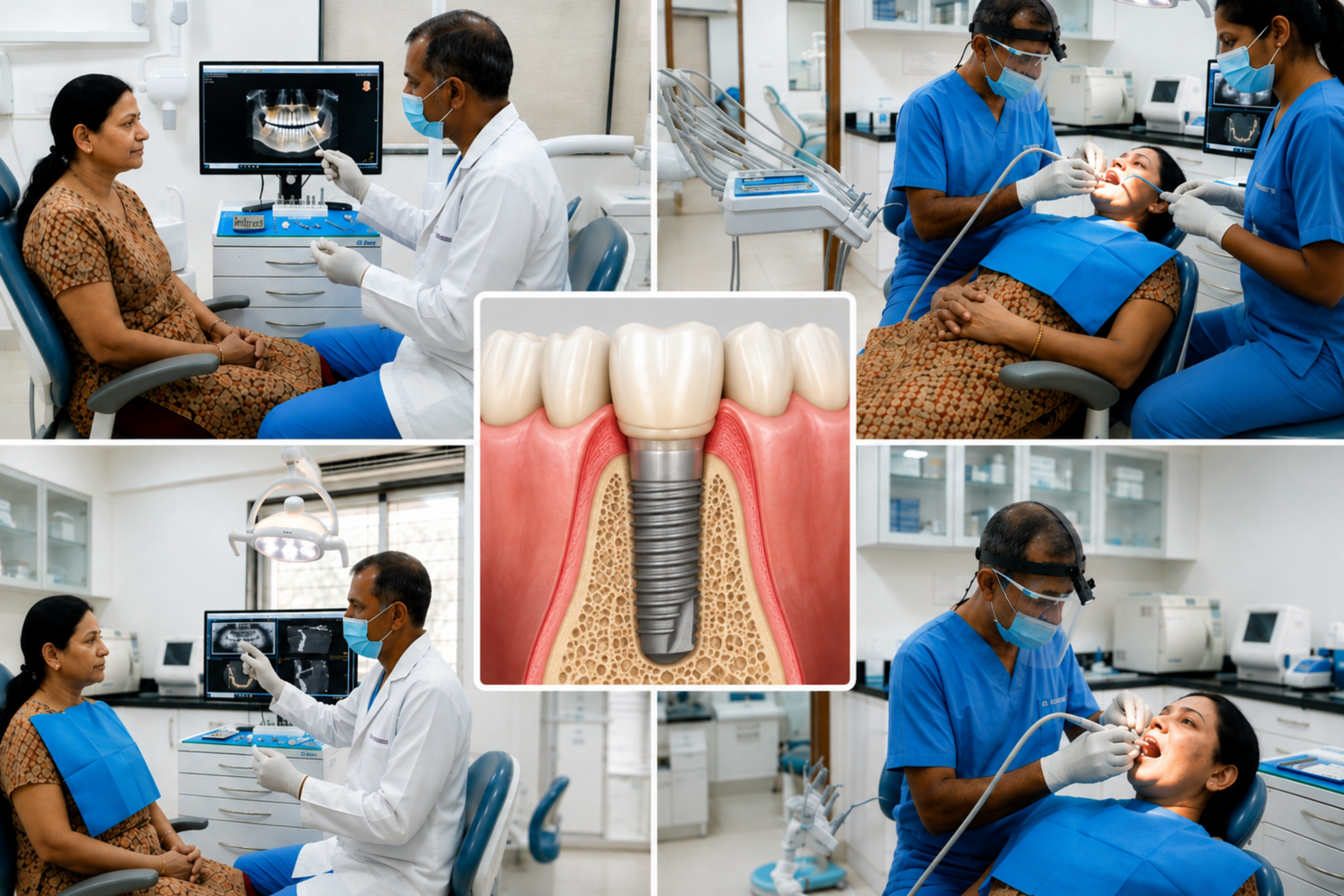
The dental implant procedure is completed in several stages. The exact treatment time can vary from patient to patient.
1. Consultation and Planning
Your dentist checks your teeth, gums, and jawbone. Dental X-rays or a 3D scan may be used to plan the implant placement.
2. Implant Placement
The dental implant is placed into the jawbone under local anaesthesia. The implant acts as a replacement for the missing tooth root.
3. Healing and Osseointegration
The implant needs time to heal and integrate with the surrounding bone. This process is called osseointegration. Healing time can vary depending on your individual case.
4. Abutment and Crown Placement
Once the implant has healed, an abutment is attached to it. A custom-made dental crown is then placed on top. The crown is designed to match your natural teeth and restore the appearance and function of the missing tooth.
Life After Dental Implants
Caring for dental implants is similar to caring for your natural teeth. Brush twice a day, clean between your teeth, and visit your dentist regularly for check-ups.
Unlike removable dentures, an implant-supported tooth does not need to be removed at night or held in place with adhesive. With proper care and regular dental visits, dental implants can provide long-term support.
Many patients also feel more confident after replacing a missing tooth. A stable, natural-looking replacement can make smiling, speaking, and eating more comfortable.
Frequently Asked Questions (FAQs)
Do dental implants look like natural teeth?
Yes. The final crown is custom-made to match the colour, shape, and size of your surrounding teeth, helping create a natural-looking smile.
How long does dental implant treatment take?
The treatment timeline varies from patient to patient depending on healing, bone condition, and whether additional procedures are required.
Can dental implants replace multiple missing teeth?
Yes. Multiple implants can support individual crowns, implant-supported bridges, or implant-supported dentures.
Can I eat normally after getting a dental implant?
You will need to follow your dentist’s dietary and aftercare instructions during healing. Once the implant has healed and the final restoration is placed, it can provide a stable chewing function.
Are dental implants better than dentures?
Both have advantages and limitations. Implants are fixed and replace the tooth root, while dentures are removable. Your dentist can help determine which option is more suitable for your needs.
Takeaways
Dental implants can do more than fill a gap in your smile. They are designed to replace the missing tooth root and provide a stable foundation for a natural-looking replacement tooth.
Whether you need a single implant, multiple implants, or an implant-supported restoration, the right treatment depends on your oral health, bone condition, gums, and individual goals.
If you are considering dental implants in Kolkata, getting an early dental assessment can help you understand your options and choose the right treatment before the problem affects your smile and oral function further.
Schedule your consultation now
If you’re missing one or more teeth and want to explore dental implants, contact Smile For All Dental Clinic to discuss your treatment options, expected timeline, and dental implant cost.
Call us today at Smile For All Dental Clinic in Kolkata for further information or to schedule a one-on-one consultation.
Continue Reading