
Home / What Happens If You Delay Cavity or Gum Treatment?
What Happens If You Delay Cavity or Gum Treatment?
Table of Contents
October 27, 2026
|Dr. Aniket Bose
|7 Min Read
A small cavity or a little bleeding while brushing may not seem like a serious dental concern. You might decide to wait until the pain starts or the symptoms become more noticeable before visiting a dentist.
However, delaying treatment for a cavity or gum inflammation can allow the condition to progress. Tooth decay may spread deeper into the tooth, while untreated gum disease can damage the tissues supporting your teeth.
Dental problems do not progress at the same rate for everyone. Some develop slowly, while others become painful or lead to complications that require more extensive treatment.
The dental team at Smile For All Dental Clinic, recommends getting persistent dental symptoms assessed rather than waiting for them to become severe.
This guide explains what may happen when you delay cavity or gum treatment, which symptoms to watch for, and when to seek professional dental care.
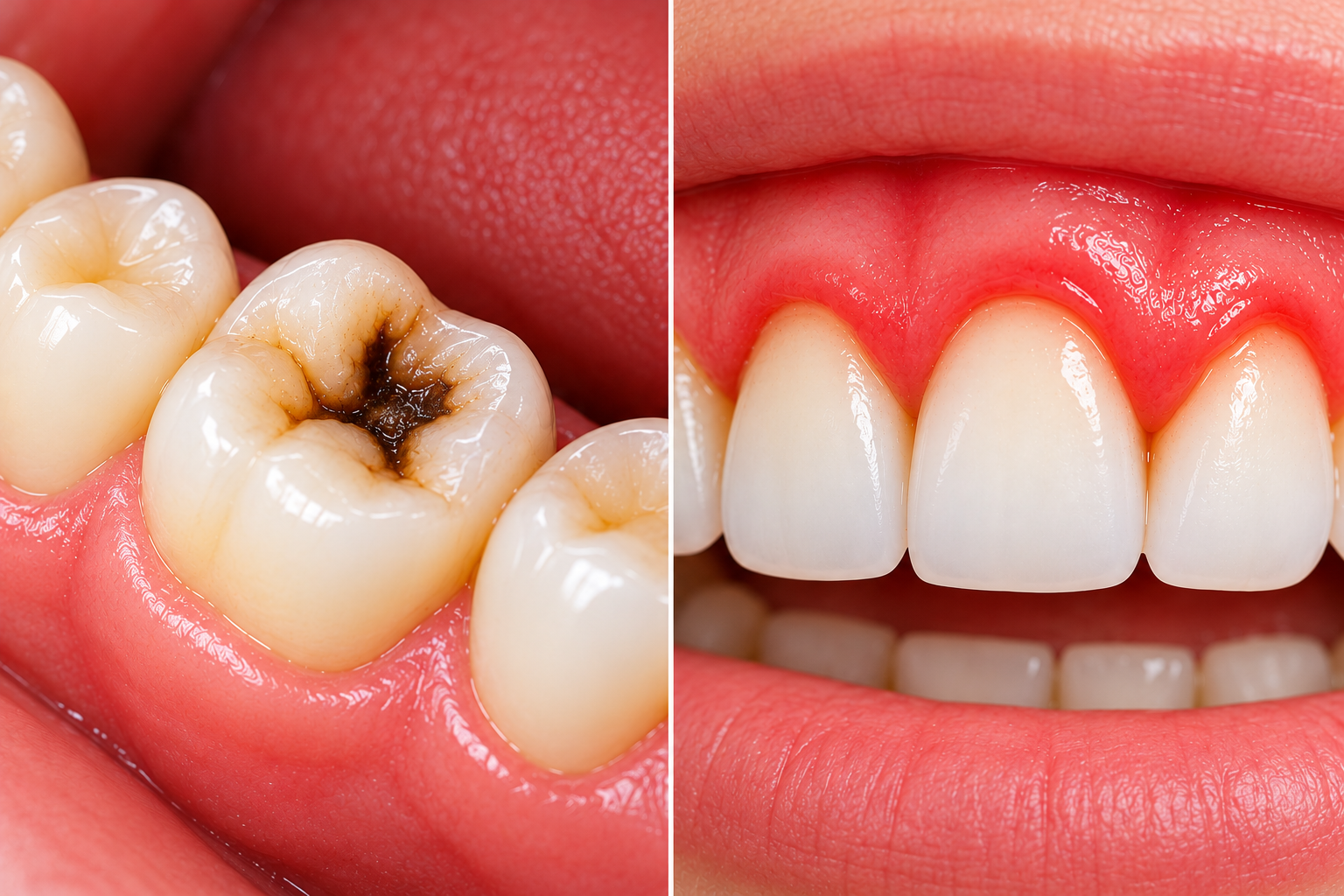
What Happens If You Delay Treatment for a Cavity?
A cavity develops when acids produced by bacteria in dental plaque damage the tooth surface. If the decay progresses without appropriate treatment, it can move through the enamel and into the deeper layers of the tooth.
The consequences depend on how far the decay has progressed when it is examined.
Tooth Decay May Get Worse
At the start of a cavity, you may not experience pain or notice an obvious hole in your tooth. Early enamel changes can sometimes appear as white or chalky spots.
If the decay continues, a cavity may develop and become larger. A dark spot can sometimes indicate tooth decay, although staining and other conditions can also cause discoloration.
Knowing what tooth decay looks like can help you recognise changes, but only a dental examination can determine whether a spot is a cavity.
You May Develop Tooth Sensitivity or Pain
As decay moves deeper into the tooth, you may notice that your tooth is sensitive to hot and cold foods or drinks.
Other symptoms can include discomfort when eating sweets, pain while chewing, or a toothache that becomes more frequent.
Sensitivity does not always mean you have a cavity, but persistent or worsening symptoms should be checked by a dentist.
The Cavity May Require More Extensive Treatment
Early tooth decay may sometimes be managed with fluoride treatments and preventive care before a hole forms. Once a cavity has developed, a filling is generally needed to restore the damaged tooth.
If decay reaches the pulp inside the tooth, root canal treatment may be necessary. If the tooth is too damaged to restore, extraction may be considered.
Delaying treatment does not guarantee that you will need extensive dental work, but it can increase the risk of complications and reduce the available treatment options.
A Dental Infection May Develop
Advanced tooth decay can lead to inflammation or infection inside the tooth. In some cases, an abscess may form, causing severe pain, swelling, or pus.
A suspected dental abscess needs urgent dental assessment. It will not resolve on its own, so do not wait it out.

What Happens If You Delay Treatment for a Gum Problem?
Gum problems can begin with inflammation caused by plaque around the teeth. At first, you may notice redness, tenderness, swelling, or bleeding during brushing.
If the problem is gingivitis, appropriate care can often reverse the inflammation. However, untreated gum disease can progress to periodontitis, which damages the tissues and bone supporting the teeth.
Redness, Swelling, and Bleeding May Continue
Red gums, swollen gums, and bleeding during brushing are common signs of gum inflammation.
A common reason for bleeding gums is plaque buildup along the gumline. If plaque is not removed effectively, it can irritate the gums and contribute to gingivitis. Factors such as smoking, diabetes, and hormonal changes (including pregnancy) can also affect gum health.
Persistent bleeding or swelling should not be dismissed as normal. A dentist can assess the cause and determine whether professional cleaning or further treatment is required.
Gum Disease May Damage the Supporting Tissues
When gum disease progresses to periodontitis, the inflammation can damage the tissues and bone that hold the teeth in place.
You may notice that your gums recede, your teeth appear longer, or gaps develop between your teeth. In advanced cases, teeth may become loose and may eventually be lost.
Unlike early gingivitis, the damage caused by periodontitis may not be fully reversible. Timely treatment can help control the disease and reduce the risk of further damage.
You May Need More Involved Gum Treatment
The treatment needed depends on the severity of the gum problem.
Early inflammation may improve with effective brushing, cleaning between the teeth, and professional cleaning when necessary. More advanced gum disease may require scaling and root planing, periodontal treatment, and ongoing maintenance visits.
If your gums remain swollen, bleed frequently, or become painful, arrange a dental examination to identify the cause.
Can You Have a Cavity or Gum Disease Without Pain?
Yes. Both tooth decay and gum disease can develop before you notice significant discomfort.
Early cavities may not cause pain, and gingivitis can produce bleeding or redness without a toothache. Some people with more advanced dental problems also experience few obvious symptoms.
This is why waiting until a tooth hurts or the gums become painful is not a reliable way to decide when you need dental care.
Regular dental examinations can help identify problems that are difficult to see or feel at home.
When Should You See a Dentist?
Arrange a dental appointment if you notice a visible cavity, persistent tooth sensitivity, recurring toothache, bleeding gums, or swelling around a tooth.
Seek urgent dental care if you experience severe or worsening pain, pus around a tooth or gum, facial swelling, or fever associated with a dental problem.
If you have difficulty breathing or swallowing, seek emergency medical care immediately.
A dentist can examine the affected area, determine whether tooth decay or gum disease is present, and explain the appropriate treatment options.
How Can You Keep Cavities and Gum Problems From Getting Worse?
Good oral hygiene and regular dental care can help reduce the risk of cavities and gum disease.
- Brush twice daily with fluoride toothpaste.
- Clean between your teeth daily using floss or an appropriate interdental cleaner.
- Limit frequent sugary snacks and drinks.
- Attend regular dental examinations based on your oral health needs.
- Seek advice if you notice persistent tooth sensitivity, bleeding gums, or swelling.
These habits help prevent new problems and support oral health, but they cannot repair an established cavity or treat every stage of gum disease. Professional assessment is important when symptoms develop.
Frequently Asked Questions (FAQs)
What Happens If You Leave a Cavity Untreated?
It can grow deeper into the tooth, causing pain, sensitivity, or infection. Treatment may then need a filling, root canal, or extraction.
Can Gum Disease Get Worse If You Do Not Treat It?
Yes. Gingivitis can progress to periodontitis, which can damage the bone and tissues supporting your teeth and cause loose teeth or tooth loss.
Can Gum Disease Be Cured?
Gingivitis can often be reversed with treatment and good oral hygiene. Periodontitis can be managed with ongoing care, but lost bone and tissue may not fully recover.
Is a Black Spot on a Tooth Always a Cavity?
No. Stains from tea, coffee, or tobacco, or old fillings, can look similar. A dentist can tell whether it is decay.
Can a Cavity Go Away Without Treatment?
Usually, no. Fluoride may reverse very early enamel damage, but a cavity with a hole needs treatment from a dentist.
What Is the Reason for Bleeding in Gums?
The most common reason is plaque buildup along the gumline, which causes gingivitis. Brushing too hard, hormonal changes, some medicines, and diabetes can also cause it. See a dentist if bleeding continues for more than two weeks.
Takeaways
Delaying treatment for a cavity or gum problem can allow the condition to worsen, sometimes leading to pain, infection, tissue damage, or more complex treatment.
A cavity may progress deeper into the tooth, while untreated gum disease can damage the tissues and bone supporting your teeth. However, the rate of progression varies, and not every dental problem develops into a serious complication.
Do not wait for symptoms to become severe. A dental examination can help identify the problem early and determine the most appropriate treatment.
Get Your Dental Concerns Checked at Smile For All Dental Clinic
If you have a cavity, persistent tooth sensitivity, bleeding gums, or swelling around a tooth, the dental team at Smile For All Dental Clinic, Kolkata, can examine you, identify the cause, and discuss suitable treatment options.
Call us today at Smile For All Dental Clinic in Kolkata for further information or to schedule a one-on-one consultation.
Continue Reading