
Home / How Fluoride Helps Prevent Cavities | Simple Science | Smile For All
A Simple Guide to How Fluoride Prevents Cavities and Protects Your Teeth.
Table of Contents
October 7, 2026
|Dr. Aniket Bose
|7 Min Read
Cavities develop when acids produced by plaque bacteria gradually remove minerals from your teeth. Over time, repeated mineral loss can weaken enamel and create a cavity.
So, how does fluoride prevent cavities? Fluoride helps strengthen enamel, reduce mineral loss during acid attacks, and support the natural repair of early enamel damage. It is one of the most effective tools for preventing tooth decay, but it works best as part of good daily oral care.
At Smile For All Dental Clinic in Kolkata, we help patients understand when fluoride can help protect their teeth and when a dental examination or other treatment may be necessary.
What Happens Before a Cavity Forms?
Your teeth are constantly going through two natural processes: demineralisation and remineralisation.
When you eat or drink, plaque bacteria use sugars and produce acids. These acids can pull minerals such as calcium and phosphate out of your enamel. This is called demineralisation.
Your saliva helps neutralise acids and supplies minerals back to the enamel. This repair process is called remineralisation.
When mineral loss repeatedly exceeds repair, enamel can become weakened and eventually break down, leading to tooth decay.
This early stage is important because fluoride can help the tooth recover before an actual cavity develops.
What Is Fluoride?
Fluoride is a naturally occurring mineral found in water, soil, and some foods. It is also added to many dental products, including toothpaste, because of its ability to protect teeth from decay.
You mainly benefit from fluoride when it comes into direct contact with your teeth. This is why brushing regularly with fluoride toothpaste is so important.
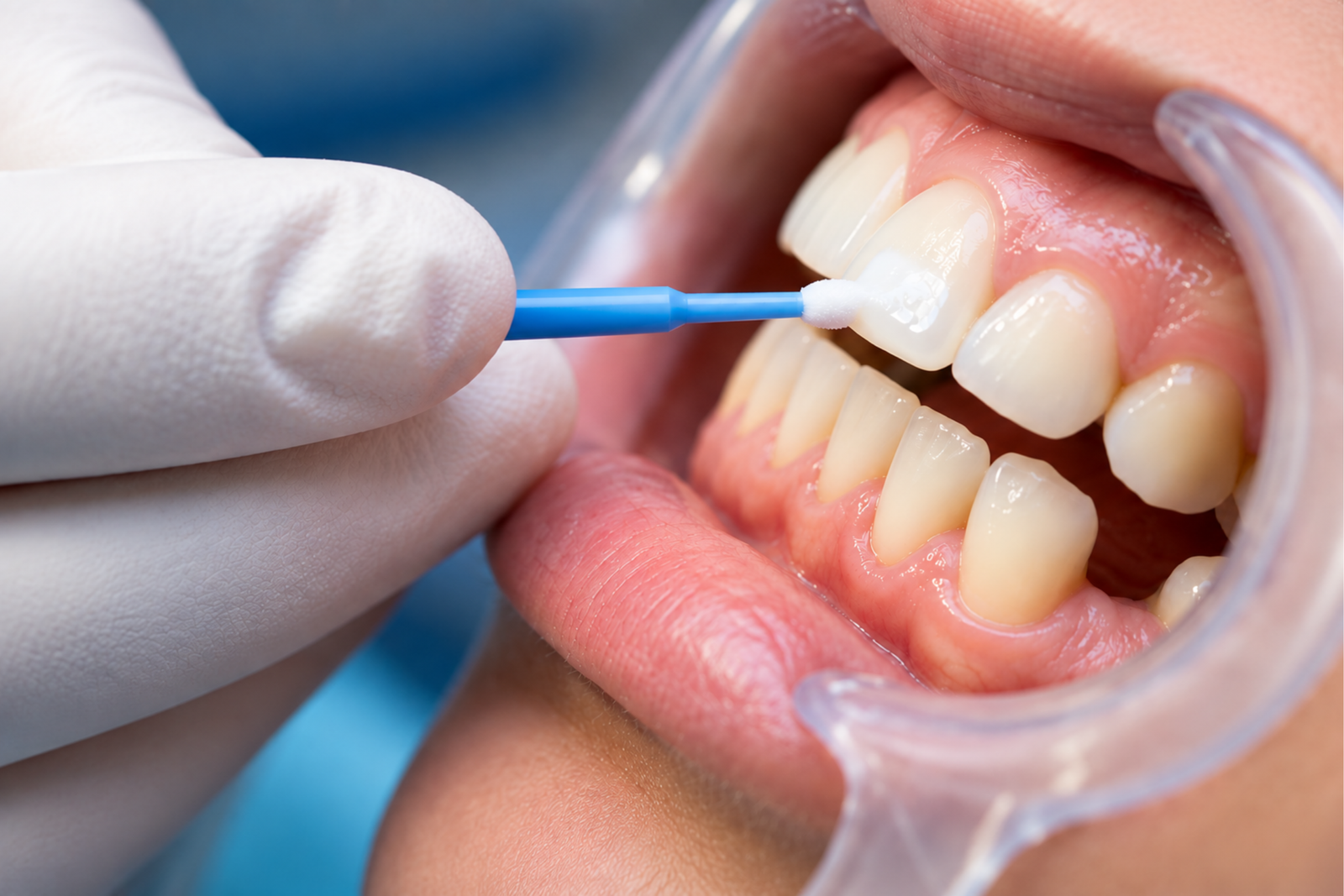
Depending on your risk of tooth decay, your dentist may also recommend a professional fluoride treatment.
How Does Fluoride Prevent Cavities?
Fluoride works mainly at the tooth surface rather than simply creating a permanent coating around the tooth. It protects teeth in four main ways.
Reduces Mineral Loss
Fluoride makes enamel less vulnerable to the acids produced by plaque bacteria, helping slow the progression toward tooth decay.
Supports Remineralisation
Acids from plaque can pull minerals like calcium and phosphate out of enamel. Fluoride helps these minerals return to weakened areas through remineralisation. It can strengthen early enamel damage but cannot rebuild tooth structure that has already been lost.
Makes Enamel More Acid-Resistant
Fluoride can contribute to the formation of fluoride-containing minerals in enamel that are more resistant to acid. Rather than acting as a permanent protective layer, it makes the tooth surface better able to withstand repeated acid exposure.
Affects Bacterial Activity
At higher concentrations, fluoride can interfere with some bacterial processes involved in acid production. This is considered a secondary effect, its main benefit still comes from protecting enamel and supporting remineralisation.
Reducing mineral loss and supporting remineralisation are the two effects that matter most for everyday cavity prevention. This is why regular exposure to fluoride, especially through fluoride toothpaste, can make a meaningful difference over time.
What Are the Benefits of Fluoride Treatment?
The main fluoride treatment benefits are related to preventing or slowing tooth decay.
A professional treatment may provide a higher concentration of fluoride directly to the teeth than everyday toothpaste. Your dentist may consider it if you have:
- Frequent cavities
- Early signs of enamel weakening
- Dry mouth
- Braces or dental appliances that make cleaning difficult
- A history of tooth decay
- Other factors that increase your risk of cavities

Fluoride Treatment for Kids
Children can be more susceptible to cavities as their teeth develop and because maintaining consistent brushing habits can be challenging.
One of the important benefits of fluoride treatment for kids is helping protect teeth that may be at increased risk of decay. A dentist may recommend fluoride treatment for kids based on the child’s cavity risk rather than simply their age.
For daily brushing, use the right amount of fluoride toothpaste based on your child’s age:
- Under 3 years: Use a tiny smear, about the size of a grain of rice.
- 3 to 6 years: Use a pea-sized amount and help your child spit it out.
- 6 years and older: Use a regular amount of fluoride toothpaste and encourage your child to spit it out after brushing.
Your child’s dentist may recommend a different approach based on their individual needs.
Fluoride Toothpaste for Cavity Prevention
For most people, brushing twice a day with fluoride toothpaste is a simple and effective way to help prevent cavities. When choosing fluoride toothpaste for cavity prevention, regular use and proper brushing matter more than choosing the strongest product.
If you have a higher risk of tooth decay, your dentist may recommend high fluoride toothpaste for cavities. These products contain more fluoride and should be used as directed.
Fluoride toothpaste helps prevent decay and support early enamel repair, but it cannot repair an established cavity.
Fluoride Treatment for Adults
Fluoride isn’t only for children. Fluoride treatment for adults may be useful when the risk of tooth decay increases.
For example, adults with dry mouth, exposed root surfaces, frequent cavities, or certain dental appliances may benefit from additional fluoride protection.
Your dentist can assess your individual risk and determine whether professional fluoride is appropriate.
When Is Fluoride Not Enough?
Fluoride significantly reduces the risk of cavities, but it cannot eliminate it completely.
Your risk is also influenced by how frequently you consume sugary foods and drinks, plaque control, saliva flow, previous cavities, and the condition of your teeth.
If a cavity has already created a physical hole in the tooth, fluoride cannot rebuild the missing tooth structure. In that situation, your dentist may need to recommend restorative treatment.
Seek prompt dental or medical attention if you develop persistent tooth pain, facial swelling, fever, or difficulty swallowing or breathing.
Frequently Asked Questions (FAQs)
Is fluoride bad for your teeth?
Fluoride is generally safe and effective when used appropriately. However, excessive fluoride intake while permanent teeth are developing can cause dental fluorosis, which may appear as white marks or changes in enamel. Using the recommended amount of fluoride toothpaste helps reduce this risk.
How long to wait to eat after fluoride treatment?
The recommended waiting time depends on the type of fluoride treatment used. Your dentist should give you specific instructions after treatment, particularly when fluoride varnish has been applied.
How long to leave fluoride varnish on teeth?
Fluoride varnish is designed to remain on the teeth for a period determined by the specific product and the dental professional who applies it. Follow your dentist’s instructions rather than using a general time for every varnish.
Can fluoride treatment be done at home?
Daily brushing with fluoride toothpaste is an important form of fluoride treatment at home. Professional fluoride treatments are different and may be recommended when additional protection is needed.
What is the cost of fluoride treatment at a dentist?
The cost of fluoride treatment depends on the type of treatment provided. It may also vary based on the patient’s individual dental needs.
Takeaways
Fluoride helps prevent cavities by reducing mineral loss, supporting remineralisation, and making enamel more resistant to acid attacks.
It works best when combined with twice-daily brushing with fluoride toothpaste, good plaque control, sensible sugar intake, and regular dental check-ups.
If you are concerned about frequent cavities, weakened enamel, or whether you need additional fluoride, a dental examination can help determine whether a professional fluoride treatment would be appropriate for you.
For an assessment of your cavity risk or concerns about fluoride and tooth decay, contact Smile For All Dental Clinic in Kolkata. A dentist can examine your teeth and explain whether preventive care, monitoring, or treatment is appropriate for your individual needs.
Call us today at Smile For All Dental Clinic in Kolkata for further information or to schedule a one-on-one consultation.
Continue Reading