
Wisdom Tooth Removal & Extraction in Kolkata
Pain at the very back of your mouth. A gum that swells and settles and swells again. Food that packs in behind the last molar no matter how you brush. That is usually a wisdom tooth announcing itself.
Most wisdom teeth that hurt once will hurt again. The question a dentist has to answer is not whether it hurts today, but whether the tooth has anywhere to go. A wisdom tooth with room to erupt straight and be cleaned properly can stay. A tooth wedged against its neighbour, half-buried under a gum flap, or growing sideways will keep causing trouble, and removing it early is easier than removing it after it has damaged the tooth in front.
At Smile For All Dental Clinic in Kolkata, that decision starts with an examination and a dental X-ray, not with a booking. We look at the angle of the tooth, how much bone covers it, the shape of its roots, how close it sits to the nerve, and the condition of the molar next to it. Then we tell you plainly whether it needs to come out, whether it can be watched, and what each option involves.
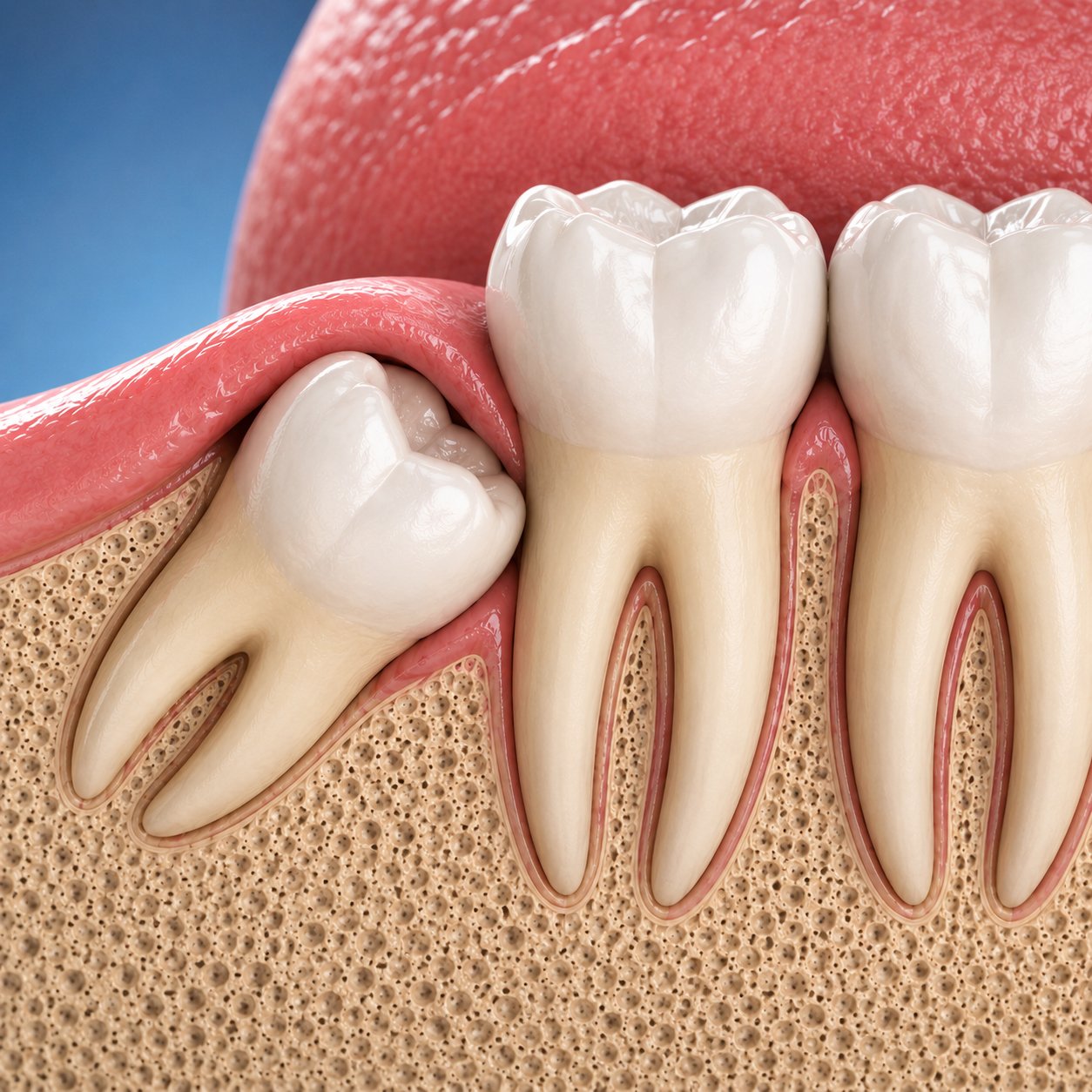
What Is Wisdom Tooth Removal?
Wisdom tooth removal is the extraction of a third molar, the last tooth at each back corner of your mouth. It is done under local anaesthetic, takes 15 to 45 minutes depending on the tooth, and is either a simple extraction (the tooth is fully out and comes away with instruments) or a surgical extraction (a small gum incision, sometimes removal of a little bone or division of the tooth into sections, then stitches).
Most adults have four wisdom teeth. Around one in four people have fewer than four, and some have none at all, which is perfectly normal and needs no treatment.
When Will Wisdom Teeth Grow?
Wisdom teeth usually erupt between the ages of 17 and 25. They form in the jaw years earlier and are often visible on an X-ray in the mid-teens, long before anything appears in the mouth.
The range is wide. Some people see a wisdom tooth at 16, others at 30, and eruption can stall halfway for years. Late eruption on its own is not a problem. What matters is the direction the tooth is travelling and whether there is space at the back of the jaw for it to arrive cleanly.
If you are in your late teens, this is the best time for a single screening X-ray. Roots are not yet fully formed, the bone is more forgiving, and if a tooth is clearly heading the wrong way it can be dealt with before it causes damage.
Signs Your Wisdom Tooth May Need to Be Removed
- Repeated pain or swelling around the same back molar
- Impaction: the tooth is stuck under gum or bone and cannot erupt fully
- Horizontal or angled growth, pressing into the molar in front
- Infection under a gum flap over a partly erupted tooth
- Decay in the wisdom tooth, or in the neighbouring molar where the two meet
- Persistent food trapping you cannot clean, no matter the technique
- Damage to the second molar: decay, root resorption or bone loss on the surface facing the wisdom tooth
- A cyst forming around an unerupted tooth (uncommon, but found on X-ray)
- Orthodontic planning, where space is needed or a tooth interferes with treatment
Book Your Appointment
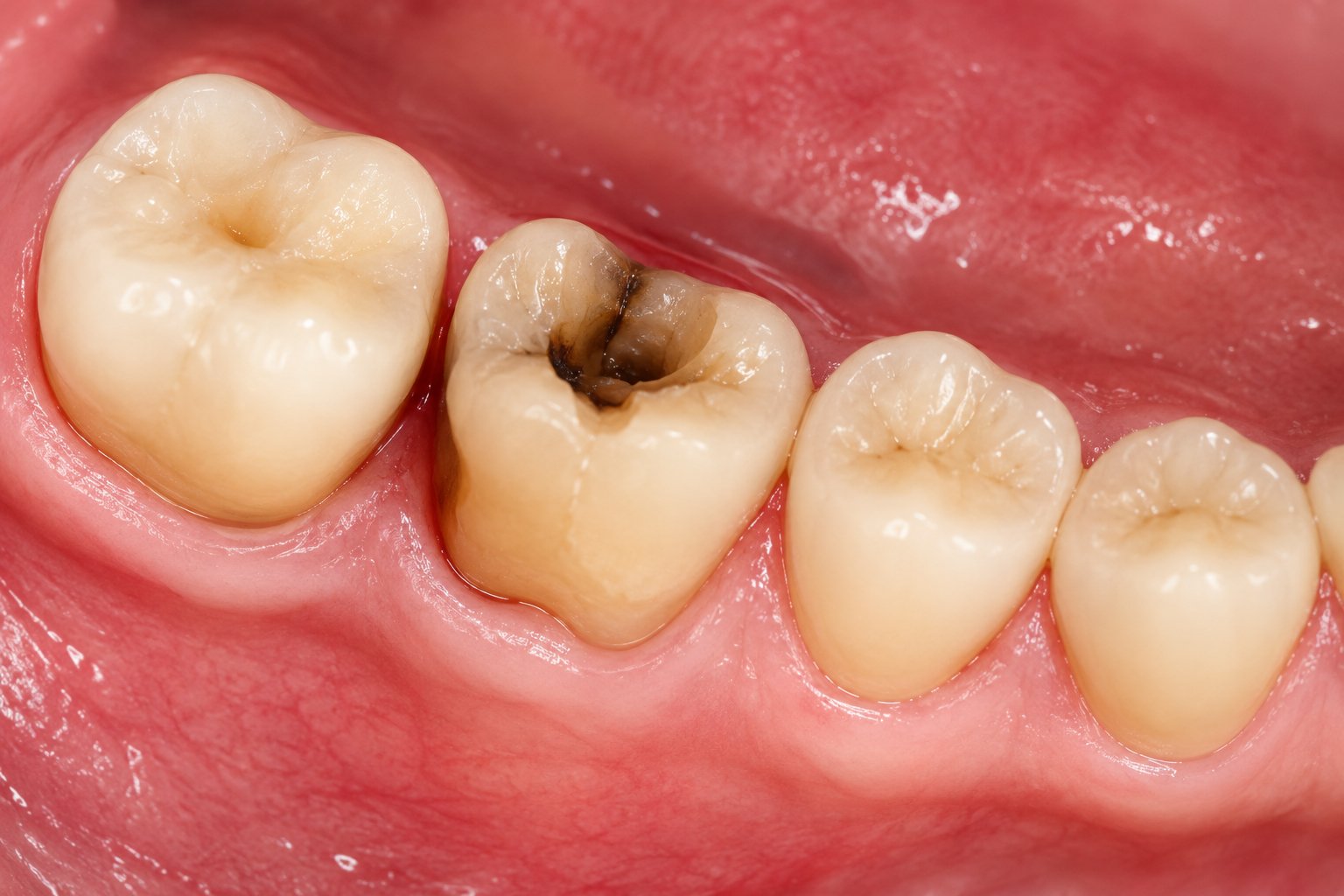
Wisdom Tooth Pain: Symptoms, Causes and Relief
Simple tooth extraction
- A deep ache or throbbing behind your last molar
- Gum that is red, puffy or tender to touch, often a flap of gum partly covering the tooth
- Pain on chewing, or when the upper tooth bites onto the swollen lower gum
- Jaw stiffness or difficulty opening the mouth fully
- Food packing behind the tooth after every meal
- A bad taste, bad breath, or discharge from the gum
- Ache spreading to the ear, temple or side of the neck
- Swollen glands under the jaw
Wisdom Tooth Pain Area: Where It Actually Hurts
The source is the very back of the jaw, but the wisdom tooth pain area patients describe is often much wider. The nerve supplying the lower wisdom tooth also serves the jaw, ear and side of the face, so pain is frequently felt as earache, a sore jaw joint, or a headache on that side, with the tooth itself feeling only mildly tender.
This is why “it can’t be my tooth, my ear hurts” is such a common and mistaken conclusion. Lower wisdom teeth refer pain upward and outward as a rule, not an exception.
How Long Does Wisdom Tooth Growing Pain Last?
Normal eruption discomfort lasts a few days to about a week per episode, then settles as the tooth pushes through. Because a wisdom tooth erupts in stages over months or years, that cycle can repeat several times.
Use this as a rough guide:
| What you’re experiencing | Likely cause | What to do |
|---|---|---|
| Mild ache and tight gum, settles within a week, returns months later | Normal eruption | Salt-water rinses, keep the area clean, mention it at your next check-up |
| Sore, swollen gum flap; food traps; bad taste; lasts more than a week | Pericoronitis (gum infection) | Book within a few days; this recurs and worsens |
| Throbbing that wakes you at night, painkillers wearing off early | Decay or infection reaching the nerve | Book this week |
| Facial swelling, fever, cannot open your mouth more than two fingers wide, difficulty swallowing | Spreading infection | Seek same-day care |
Pain that lasts beyond a week, returns every few weeks, or gets worse rather than better is not eruption. It needs an X-ray.
Wisdom Tooth Pain Relief at Home
Home measures buy comfort while you arrange an appointment. They do not treat the cause.
What genuinely helps:
- Warm salt-water rinses. Half a teaspoon of salt in a cup of warm water, held around the area and let fall out (don’t swill hard), three to four times a day and after meals. This flushes debris from under the gum flap, which is what usually drives the pain.
- Cleaning the area properly. It hurts, so most people avoid it, and that makes it worse. Use a soft or single-tufted brush and clean the back surface gently but deliberately.
- Over-the-counter pain relief, taken at the correct dose and interval on the packet. Ask a pharmacist or your dentist if you have any medical condition, take other medication, or are pregnant.
- A cold compress against the cheek, 15 minutes on and 15 off, for swelling.
- Soft food and chewing on the other side while it settles.
- Holding an aspirin or clove oil against the gum. This burns the soft tissue and can leave a chemical ulcer on top of the original problem.
- Heat on the cheek when the face is swollen. Heat encourages an infection to spread.
- Leftover antibiotics from a previous illness. The wrong drug, the wrong dose, or a partial course masks the symptoms while the infection continues.
- Poking at the gum flap with a pin, toothpick or fingernail.
Searches for home remedies for wisdom tooth pain spike exactly when pain starts suddenly at night. Rinse, take appropriate pain relief, apply cold, and call in the morning. That is the right sequence.
Unbearable Wisdom Tooth Pain: When It Is Urgent
- Swelling of the cheek, jaw or under the chin
- Fever or feeling generally unwell
- Inability to open your mouth more than about two fingers wide
- Difficulty swallowing, or a change in your voice
- Any difficulty breathing. This is an emergency: go to a hospital
Wisdom Tooth Infection and Swollen Gums
When a wisdom tooth erupts only part of the way, it leaves a flap of gum over part of the crown. Food and bacteria collect in the pocket underneath, where no toothbrush reaches. The gum becomes inflamed and infected, a condition called pericoronitis. It is the single most common reason a wisdom tooth suddenly becomes painful.
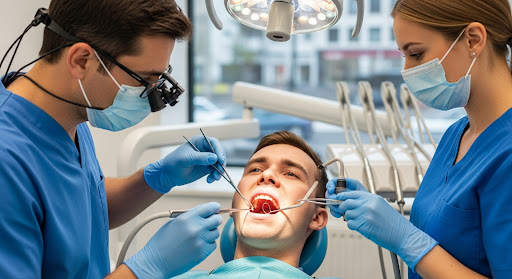
Infected Wisdom Tooth Symptoms
- Pain that builds over days rather than arriving and leaving
- Bright red, swollen gum around or over the tooth
- A persistent bad taste, or pus when the gum is pressed
- Bad breath that brushing does not fix
- Pain on chewing, and biting your own swollen gum
- Jaw stiffness (trismus)
- Swollen glands under the jaw
- Swelling of the cheek or face, and fever, in more advanced cases
How to Treat Swollen Gums Near a Wisdom Tooth
Treatment depends on what is causing the swelling, which is why the first step is identifying it:
- Professional cleaning of the pocket. In most cases, irrigating and debriding under the gum flap settles the acute episode faster than anything else.
- Antibiotics where infection has spread beyond the gum: swelling, fever, or trismus. Antibiotics are an adjunct, not the treatment. They suppress the episode without removing the flap that caused it.
- Treating the cause. Once the acute phase settles, the choice is between removing the wisdom tooth or, in a small number of cases where the tooth is well positioned and only the gum flap is the problem, reshaping that flap.
Pericoronitis recurs. If you have had two or more episodes on the same tooth, extraction is usually the option that ends the cycle.
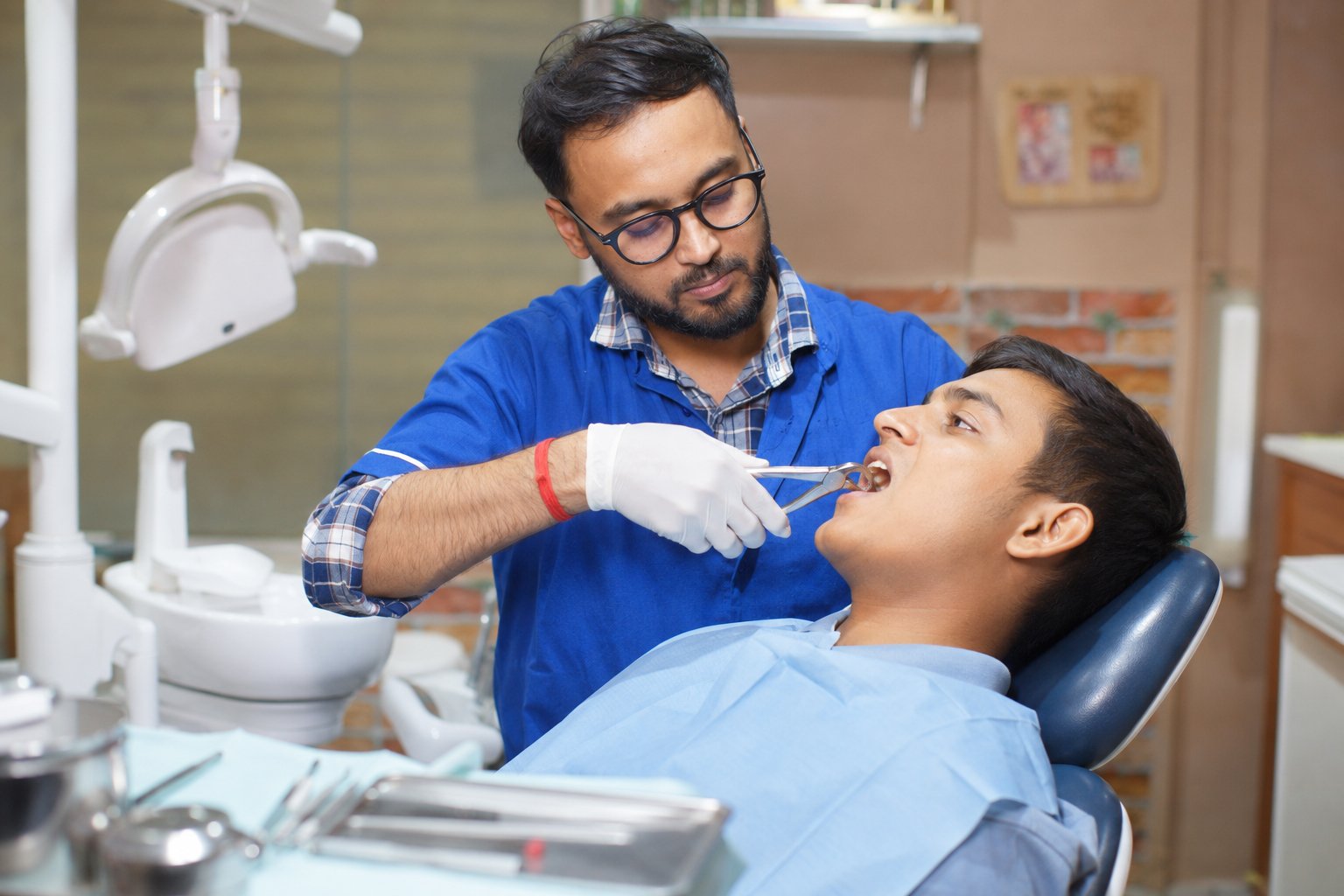
Wisdom Tooth Cavity and Decay
A wisdom tooth cavity is common for a simple mechanical reason: the tooth sits where a toothbrush handle hits your cheek and the bristles arrive at the wrong angle. Plaque stays. Decay follows.
Signs of wisdom tooth decay:
- Toothache, or sensitivity to cold and sweet things
- Pain on biting
- Food wedging in the same spot every time
- A visible hole, dark patch or crumbling edge
- Persistent bad taste or breath
The more serious problem is often not the wisdom tooth itself. Where a tilted wisdom tooth meets the second molar, a decay trap forms between them, and the second molar, a tooth you need for the rest of your life, decays on its back surface where it cannot be seen or cleaned. Detecting that early, on an X-ray, is a strong argument for removing the wisdom tooth before it costs you the tooth in front.
If the decay is accessible and the tooth is well positioned, it can be restored: see Dental Fillings or, if the nerve is involved, Root Canal Treatment. If the tooth is tilted, impacted, or hard to clean and likely to decay again, extraction is usually the more sensible outcome.
Impacted and Horizontal Wisdom Teeth
An impacted wisdom tooth is one that cannot erupt into a normal position because bone, gum or the tooth in front is in the way. Impaction is described by direction:
| Type | How it grows | Typical consequence |
|---|---|---|
| Vertical | Straight up, but may not fully clear the gum | Often fine; gum flap can trap food |
| Mesioangular | Tilted forward into the second molar | Most common impaction; decay trap between the two teeth |
| Horizontal | Lying on its side, crown pressing into the molar in front | Rarely erupts; can cause decay or root resorption of the neighbour |
| Distoangular | Tilted backward, away from the second molar | Often the most surgically involved to remove |
A horizontal wisdom tooth grows sideways rather than upright. It will almost never erupt usefully, and its crown pushes directly against the root of the second molar. Removal is more involved than a straightforward extraction, since the tooth is usually divided into sections and removed piece by piece, but it protects the molar in front.
A partly erupted impacted tooth is the worst of both worlds: exposed enough for bacteria to reach, buried enough that you can never clean it. Fully buried teeth with no symptoms and no X-ray changes can often simply be monitored.
An X-ray (an IOPA for a single tooth, or an OPG for a full view of both jaws) shows the angle, the depth of bone, the root shape, and how close the roots run to the nerve canal in the lower jaw. That last point directly changes the surgical plan, which is why we take one before recommending anything. See Dental X-Ray.
Book Your Appointment
The Wisdom Tooth Extraction Procedure, Step by Step
Examination and X-ray
We examine the tooth, gum and the molar next to it, and take an X-ray to assess position, root shape, bone level and the proximity of the nerve. You will be told which type of extraction is needed and why.
Local anaesthetic
The area is numbed thoroughly. For lower wisdom teeth this includes a block that numbs the side of the jaw, lip and tongue. We test that you are fully numb before starting. Nothing begins until you are.
Removing the tooth
A small incision releases the gum, a little bone may be removed, and the tooth is often divided into sections so it can come out through a smaller opening.
Cleaning and closing
The socket is cleaned, and stitches are placed where a flap was raised. We commonly use dissolving sutures, which loosen and disappear over 7 to 14 days.
Aftercare
You bite on gauze for 30 to 45 minutes, and leave with written instructions, prescriptions where needed, and a number to call if anything concerns you.
Before and After Wisdom Teeth Removal: What to Expect
Before your appointment
- Eat a proper meal beforehand. This is done under local anaesthetic, so you do not need to fast (unless we have specifically arranged sedation).
- Tell us your full medical history, especially blood thinners, diabetes, heart valve conditions, bisphosphonate or steroid medication, immunosuppression, or if you are pregnant or breastfeeding. Any of these change the plan.
- Buy your soft food and fill your prescriptions in advance. You will not want to be shopping afterwards.
- Do not smoke on the day of the procedure.
- Arrange for someone to accompany you if a complex surgical extraction or sedation is planned.
- Book sensibly. The day before a rest day is easier than the day before a presentation or an exam.
Wisdom Teeth Removal Aftermath: A Day-by-Day Timeline
Recovery is predictable enough that you can plan around it. Individual healing varies, but the shape is consistent:
| When | What is normal |
|---|---|
| First 24 hours | Numbness for 2 to 4 hours. Light oozing that pinks your saliva. The blood clot forms, so protect it: no rinsing, no spitting, no straws, no smoking. Cold compress 15 minutes on, 15 off. Cool soft food. |
| Days 1 to 3 | Swelling builds and peaks around 48 to 72 hours. This is normal healing, not deterioration. Jaw stiffness at its worst. Start gentle warm salt-water rinses after the first 24 hours. |
| Days 3 to 5 | Swelling turns the corner and begins to fall. Yellow or purple bruising may appear along the jaw and fade over a week. Pain should now be decreasing every day. |
| Days 5 to 7 | Most people are back to normal routine and eating a wider range of food. Dissolving stitches begin to loosen. Non-dissolving sutures are removed around day 7 to 10. |
| Weeks 2 to 3 | Gum has closed over the socket. Jaw opening back to normal. Most restrictions lift. |
| Months 1 to 6 | Bone fills the socket underneath and the dip in the gum gradually levels out. No symptoms during this stage. |
The single most useful signal: after day three, each day should be better than the last. Pain that increases on days three to five, especially a deep throbbing ache spreading to the ear with a bad taste and an empty-looking socket, suggests dry socket: the clot has been lost. It is not dangerous, but it is painful and it will not resolve on its own quickly. Call us; a dressing placed in the socket brings relief quickly.
Dos and Don'ts After Wisdom Tooth Extraction
Home measures buy comfort while you arrange an appointment. They do not treat the cause.
Do:
- Bite firmly on the gauze for 30 to 45 minutes, and replace it if bleeding continues
- Rest for the remainder of the day, head slightly raised
- Use a cold compress for the first 24 hours
- Eat soft, cool food: khichdi, curd, dal, mashed potato, soup once cooled, smoothies from a spoon
- Take prescribed medication exactly as directed, and finish any antibiotic course
- Start gentle warm salt-water rinses from the day after, especially after meals
- Keep brushing your other teeth normally, avoiding the socket itself
- Stay hydrated
Don’t:
- Rinse, spit or swill on the day of the procedure; it dislodges the clot
- Use a straw for at least 3 days (suction pulls the clot out)
- Smoke or use tobacco or paan for at least 72 hours, and preferably a week. Smoking is the biggest single risk factor for dry socket
- Drink alcohol while on medication or in the first 24 hours
- Eat hot, spicy, crunchy or seedy food early on; chilli, chips, popcorn and nuts all find the socket
- Poke the site with your tongue, finger or a toothpick
- Do heavy exercise, lifting or bending for 2 to 3 days
- Ignore worsening pain, bleeding that will not stop, or fever after day two
Wisdom Teeth Removal Side Effects
- Soreness and tenderness for several days
- Facial swelling peaking at 2 to 3 days
- Jaw stiffness and limited mouth opening for a few days
- Light oozing for the first 24 hours
- Bruising along the jaw or cheek
- Difficulty chewing for the first week
- Dry socket: pain worsening after day three with a bad taste, typically 2 to 5% of extractions and higher in smokers
- Infection of the socket: swelling and fever appearing after day three rather than settling
- Prolonged bleeding that does not stop with 30 minutes of firm gauze pressure
- Altered sensation in the lip, chin or tongue after lower extractions, where roots lie close to the nerve. Usually temporary; permanently altered sensation is rare. This is precisely the risk your X-ray is taken to assess, and we will tell you before treatment if your anatomy puts you in a higher-risk group.
Can You Keep Your Wisdom Teeth?
- Fully erupted and upright
- Meeting an opposing tooth and doing useful chewing work
- Cleanable with a normal brush and floss
- Free of decay and gum inflammation
- Showing no signs on X-ray of pressure or damage to the second molar
Wisdom Tooth Removal Cost in Kolkata
- Simple or surgical extraction
- Tooth position
- Impacted or erupted tooth
- Root shape and complexity
- Number of teeth being removed
- Required X-rays or diagnostic imaging
The wisdom tooth extraction cost in India can therefore vary considerably between cases and clinics.
At Smile For All Dental Clinic, Kolkata, treatment costs are discussed after assessing the tooth and determining the appropriate procedure.Why Choose Smile For All for Wisdom Tooth Removal in Kolkata?
- We assess before we recommend. Every case starts with an examination and an X-ray. If your tooth does not need to come out, we will tell you so.
- Simple and surgical extractions under one roof, including impacted and horizontally positioned teeth.
- On-site dental imaging, so assessment and planning happen in the same visit.
- Clear, itemised costs confirmed before treatment, with no additions afterwards.
- Written aftercare and a direct line. You leave knowing exactly what is normal, what is not, and who to call.
- Two Kolkata clinics, Kasba (near Bijan Setu) and Tangra, with evening appointments and WhatsApp booking.

Frequently Asked Questions About Wisdom Tooth Removal
You likely need removal if you have had repeated pain or swelling around the same tooth, an infection under the gum flap, decay in the wisdom tooth or the molar next to it, or an X-ray showing the tooth pressing into its neighbour. A single episode of eruption soreness is not enough on its own; an examination and X-ray settle it.
No. A wisdom tooth that is upright, fully erupted, biting against an opposing tooth and cleanable should be kept and monitored like any other tooth.
The most common causes are eruption itself, pericoronitis (infection under a gum flap over a partly erupted tooth), decay, pressure from an impacted tooth against the molar in front, and food trapping between the two.
Most people are back to normal routine within 5 to 7 days. Swelling peaks at 48 to 72 hours and then declines; the gum closes over the socket in about 2 weeks, and the bone underneath fills in over several months without symptoms. Surgical extractions of impacted teeth sit at the longer end of that range.
Not during the procedure. The area is fully numb and you feel pressure rather than pain. Afterwards, expect soreness peaking over the first two to three days, manageable with prescribed pain relief.
Normal eruption discomfort lasts a few days to a week per episode, and can recur over months as the tooth emerges in stages. Pain lasting longer than a week, or getting worse rather than better, points to infection or impaction and should be examined.
A wisdom tooth lying on its side in the jaw instead of growing upright, with its crown pressing into the root of the molar in front. It will not erupt usefully and can cause decay or root damage to that neighbouring tooth, so removal is generally advised, usually as a surgical extraction with the tooth divided into sections.
It depends on whether the tooth is erupted or impacted, whether surgical access is needed, root complexity, and the number of teeth removed. We confirm an exact figure in writing after your examination and X-ray, before treatment starts.
No. Salt-water rinses, careful cleaning and cold compresses give real temporary relief, but they cannot remove an impaction, treat decay, or clear an infection under a gum flap. Use them to stay comfortable until you are seen, not instead of being seen.
Usually it is better to do one side at a time so you always have a comfortable side to chew on. Doing both teeth on the same side together is common and often more economical than two separate visits.
Book Your Wisdom Tooth Consultation in Kolkata
If a wisdom tooth is hurting, swelling, trapping food or has flared up more than once, the useful next step is an X-ray and ten minutes with a dentist, not another week of painkillers.
We will tell you what is happening, whether the tooth needs to come out, what removing it would involve, and exactly what it costs. If it does not need removing, we will say that too.
Appointment booking form